
Applications
Continuous exterior insulation
One unbroken layer of rigid board outboard of the framing. It covers the studs, plates and rim joist that cavity insulation cannot reach, and it keeps the back of your sheathing warm enough to stay dry through a Duluth winter.

Why it exists
Your studs are a hole in the insulation
Cavity insulation stops at every stud, plate and header. Wood conducts heat far better than insulation does, and framing takes up roughly a quarter of a typical wall. Fill the cavity perfectly and you are still handing that quarter over to the lumber.
A continuous layer runs across the face of all of it. Nothing bypasses it, and it goes on without opening a single square foot of interior finish.
- It covers what the cavity cannot. Studs, plates, headers and the rim joist, in one layer.
- It warms the sheathing. Which is the durability argument, and the one most people skip.
- It goes on from outside. No plaster, no paint, no trim, no living through the work.
Warm sheathing stays dry sheathing
The reason to insulate outside the framing is not only the energy bill. It is that the back of the sheathing is the coldest surface in the wall, and cold surfaces are where indoor humidity condenses.
- Raises the sheathing temperature
- Cuts the condensation hours
- Protects the structure, not just the bill
- Gives you a plane to air seal against
Energy is the benefit people buy. Durability is the one that matters.
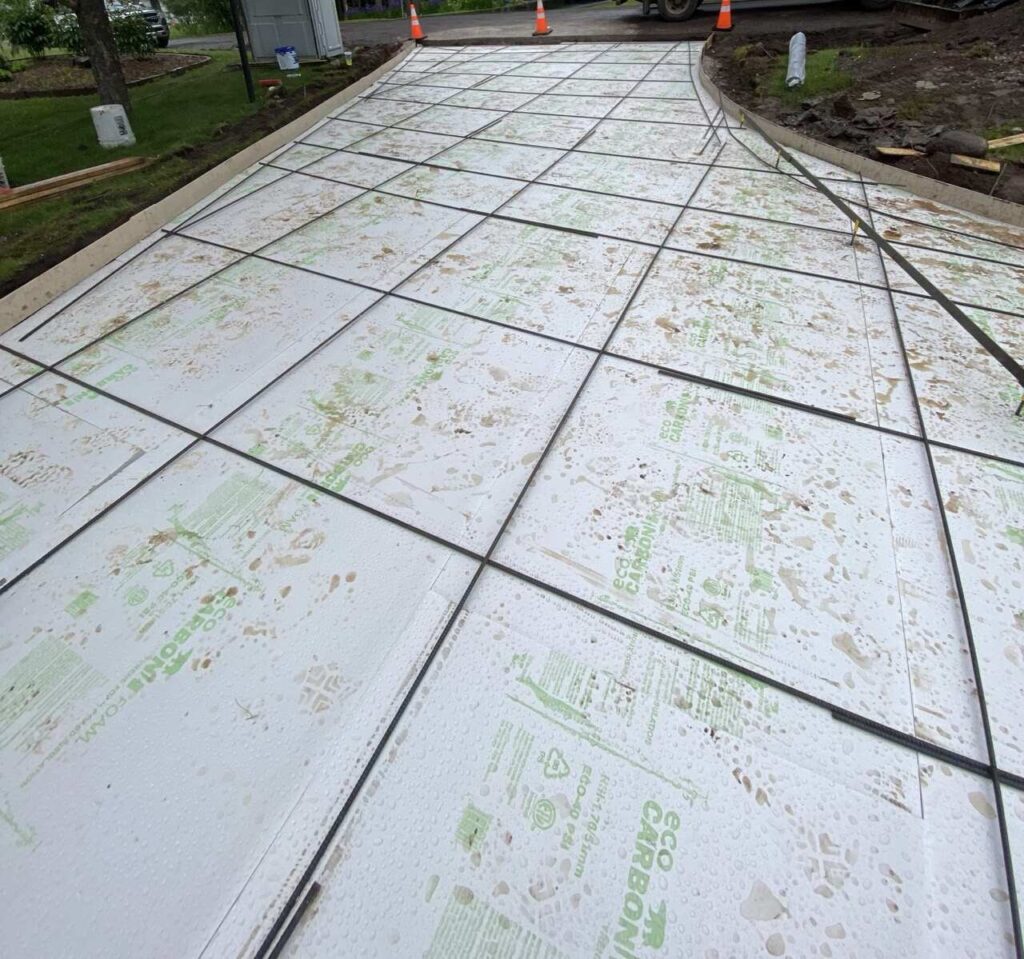
How much you need, by climate zone
The share of the wall's total R-value that has to sit outboard of the sheathing to keep it above the dew point. Duluth and the Arrowhead are Climate Zone 7.
Zone 4
20 percent of the assembly outboard. Most of the mid Atlantic.
Zone 5
30 percent outboard. Southern Minnesota, Chicago, Boston.
Zone 6
35 percent outboard. Most of Minnesota and Wisconsin.
Zone 7
45 percent outboard. Duluth, the Iron Range, the North Shore.
What that means in Duluth
Two inches is a Zone 5 answer to a Zone 7 problem
Run the ratio against a real wall. Over a 2x4 cavity at R-13, Zone 7 wants about R-10.6 outboard, which is a shade over two inches of our board. That is straightforward.
Over a 2x6 cavity at R-21, which is what Minnesota code lists for Zone 7, the same ratio wants about R-17.2 outboard. That is roughly three and a half inches, so it is a two layer detail with staggered seams rather than a single sheet. Worth knowing before you order, because three inches on its own reaches 42 percent and lands you in Zone 6 territory.
The code lets you trade continuous insulation for cavity R-value. The condensation research it was based on does not.
Eco Foam Solutions
- R-13 cavity plus R-10 continuous gives 43 percent. Good through Zone 6, just short of Zone 7.
- R-20 cavity plus R-5 continuous gives 20 percent. A code compliant wall that fails the condensation ratio everywhere colder than Zone 4.
- R-21 cavity plus two layers of 2 inch gives 49 percent. Clears Zone 7 with room in hand.
Continuous insulation questions
Does Minnesota code require continuous insulation?
No. The 2020 Minnesota Residential Energy Code lists a Climate Zone 7 wood framed wall as R-21 with no continuous insulation component. The only place it is prescriptively required in this state is a 2x4 wall in Zone 6. The national model code authors looked at climates like ours and made it standard; Minnesota did not adopt that line. Adding it here is a performance decision, not a compliance one.
What R-value is the board?
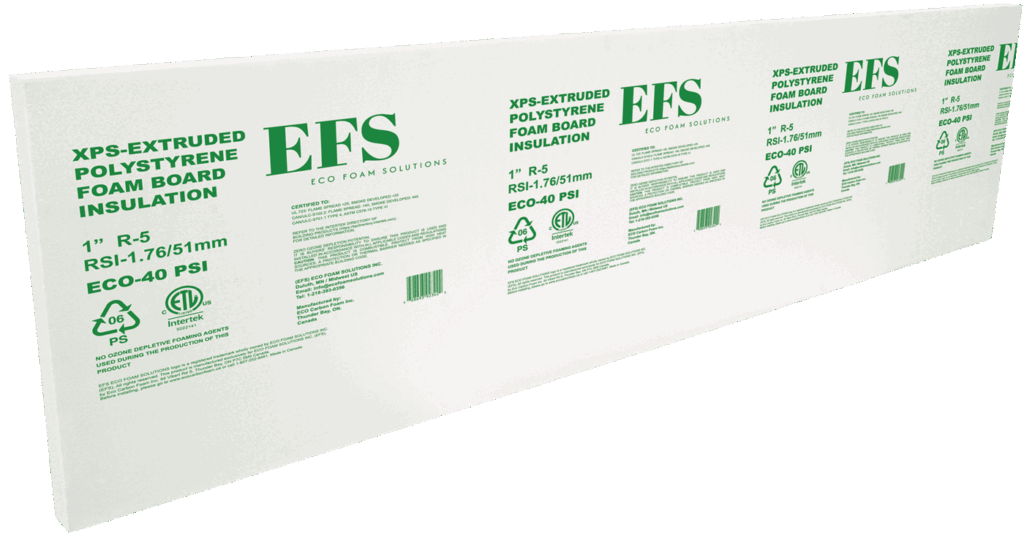
R-5 per inch, which is the value it is certified and printed to. Available in 1 inch, 1.5 inch, 2 inch and 3 inch.
Is it a vapor barrier?
It is a Class II vapor retarder, measured at 0.71 perm. That matters on an older wall that has been drying in both directions for decades, because adding a semi-impermeable layer outside changes how the assembly dries. The interior side has to be considered alongside it. That is a decision for your builder or engineer, and we are happy to supply the test data they need to make it.
Can I put it on over old plank sheathing?
It is done regularly, and the best moment is while the siding is already off, because siding removal is most of the labour. Doing it later as a standalone job means paying for that access twice.
How is it fastened?
Cap nails or long fasteners with washers through to the framing, depending on the thickness and the cladding going back on. Follow the cladding manufacturer's fastening schedule and your engineer's direction. Tell us the assembly and we will tell you what we have seen work.
Do you stock it locally?
Yes. Truckloads are on the ground in Duluth. The board is manufactured in Thunder Bay, which leads people to assume the stock sits in Canada. It does not.
What customers say
Trusted by the crews who pour the concrete
Five out of five across every Google review, from contractors across the Upper Midwest.
I have used them and their materials several times. Not only is their material far better than their competitors but the service is as well. I was in a jam and Caleb hand delivered what I needed within the hour. I highly recommend.
Amazing product! It is the only foam we will use beneath our concrete. It performs far better than its direct competitors at a similar price. Service has been excellent, and our materials always show up on time.
EFS is a top-notch supplier. Their high-density eco foam is an excellent new product, strong, clean, and reliable. Great quality materials and service we can count on. Highly recommend.
Eco foam in my opinion is the only foam worth using. The quality and strength of the foam impresses me every time I work with it and use it. I will be using Eco foam for all of my projects. [excerpt]
Best foam on the market. Great service and fast delivery.
Solid product and support.
Pick your material, pick your delivery date
Order online or text your reorder. We schedule the drop and it lands on site when your crew needs it.