
Monolithic slab forms
Eco Form
A slab form designed to hold concrete, rather than lumber pressed into a job it was never built for. The form is the insulation, so it stays in the slab instead of being stripped, stacked and thrown away.
Why it exists
Wood was never designed to hold concrete.
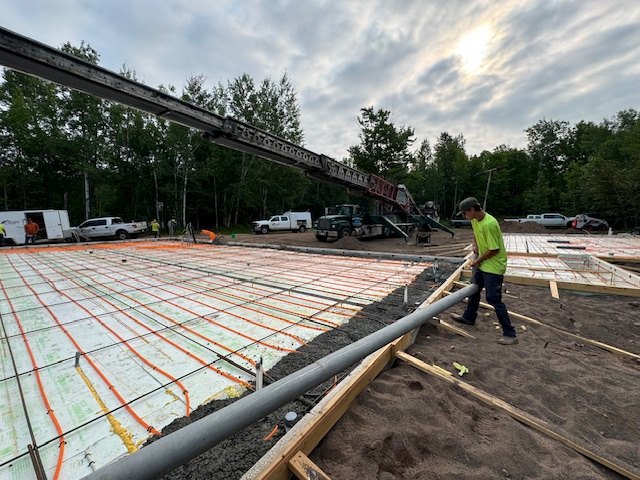
Dimensional lumber is a framing material. The trade has formed slabs with it for as long as anyone can remember, and every crew has learned the workarounds: brace it, stake it, tape foam to the inside, strip it, stack it, and hope the same boards come back in one piece. Eco Form started from the other end. It was drawn as a form for concrete first, with the insulation, the corners and the height adjustment designed in rather than bolted on.
Below grade
Four things a wood form cannot do
-
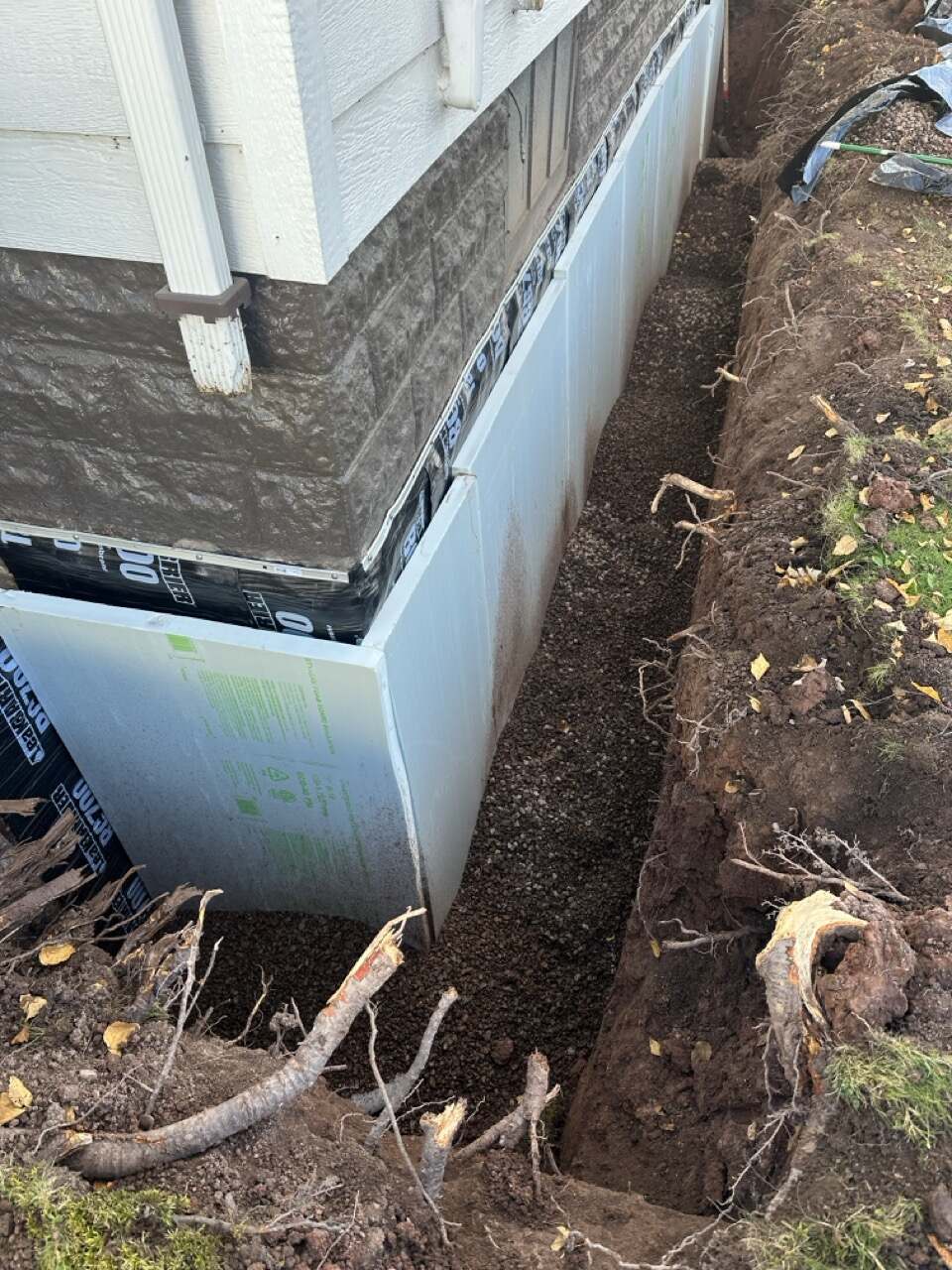
The gap on the left went unnoticed on finished houses for years, because it only exists after the forms come off and the backfill goes in. No gap when the form comes off
Foam taped inside a wood form lets go when the form is stripped, opening a void at the coldest, wettest line in the building. Eco Form stays in the slab, so there is nothing to strip and nothing to release.
-
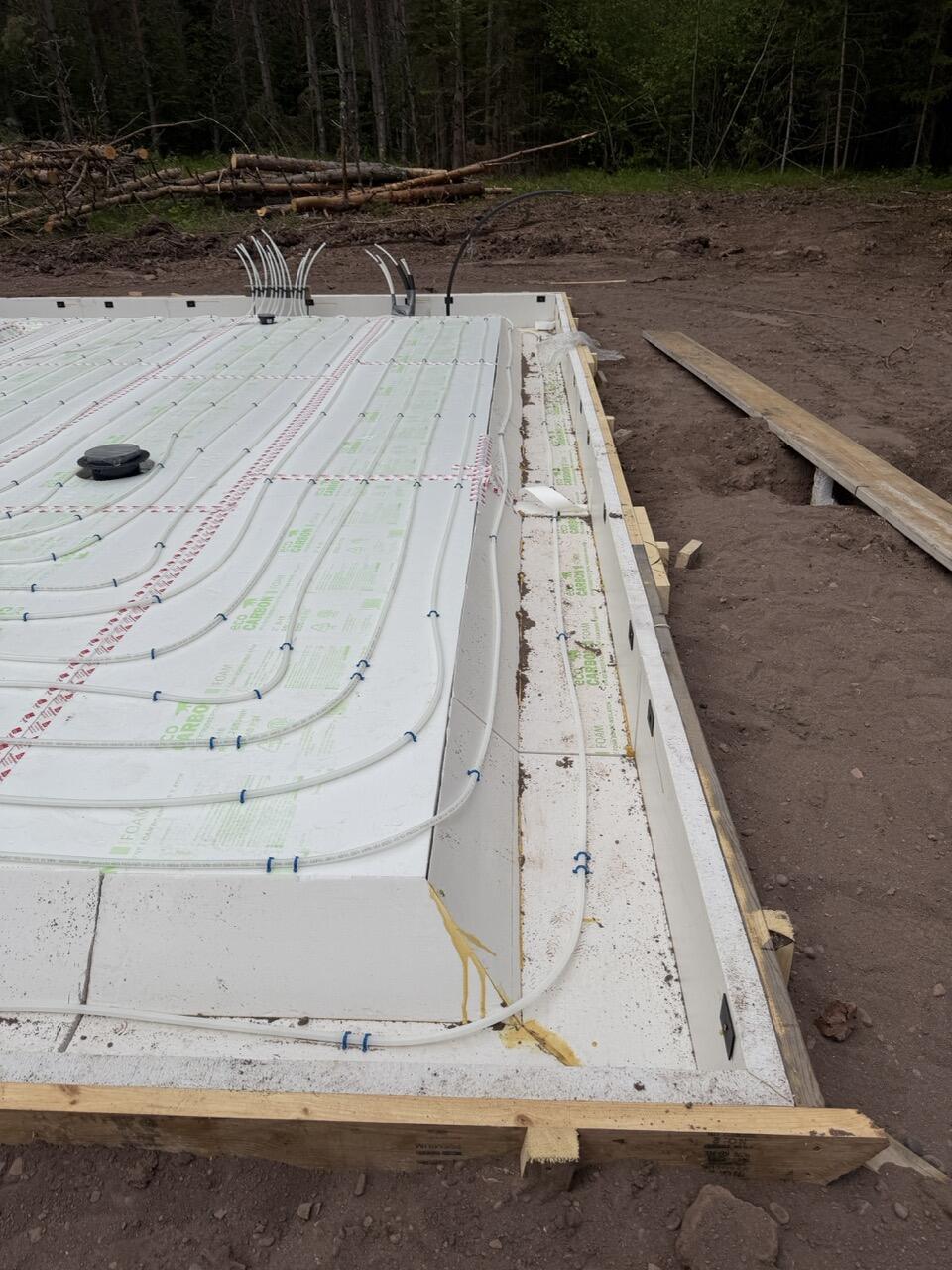
The exterior frost board laps up the face of the form rather than butting into it, so the fasteners sit behind insulation instead of behind a joint. The frost board laps the fasteners
Wood butts into the assembly and frost tracks the joint. Eco Form laps two inches up the face, putting the fasteners behind insulation instead of through it.
-
Set the corners with your best hand, then anyone on the crew can connect them with straights. That is where the install time goes. One line to set instead of two
Your best hand sets the corners and anyone can connect the straights, every wall at once. No interior form, no bracing, and backfill stops being the thing holding the form true.
-
The insulation still has to be covered. Where it sits decides whether a driveway, an apron or a garden bed can go next to the building without a second base. Cover left at grade
Siding warranties want six inches of clearance and an angled form eats most of it. Eco Form sits flat and low, which leaves room for a driveway base, planting soil and a gutter run.
On site
What changes the day you set forms
Same slab, same crew, same concrete truck. Here is what comes off the job.
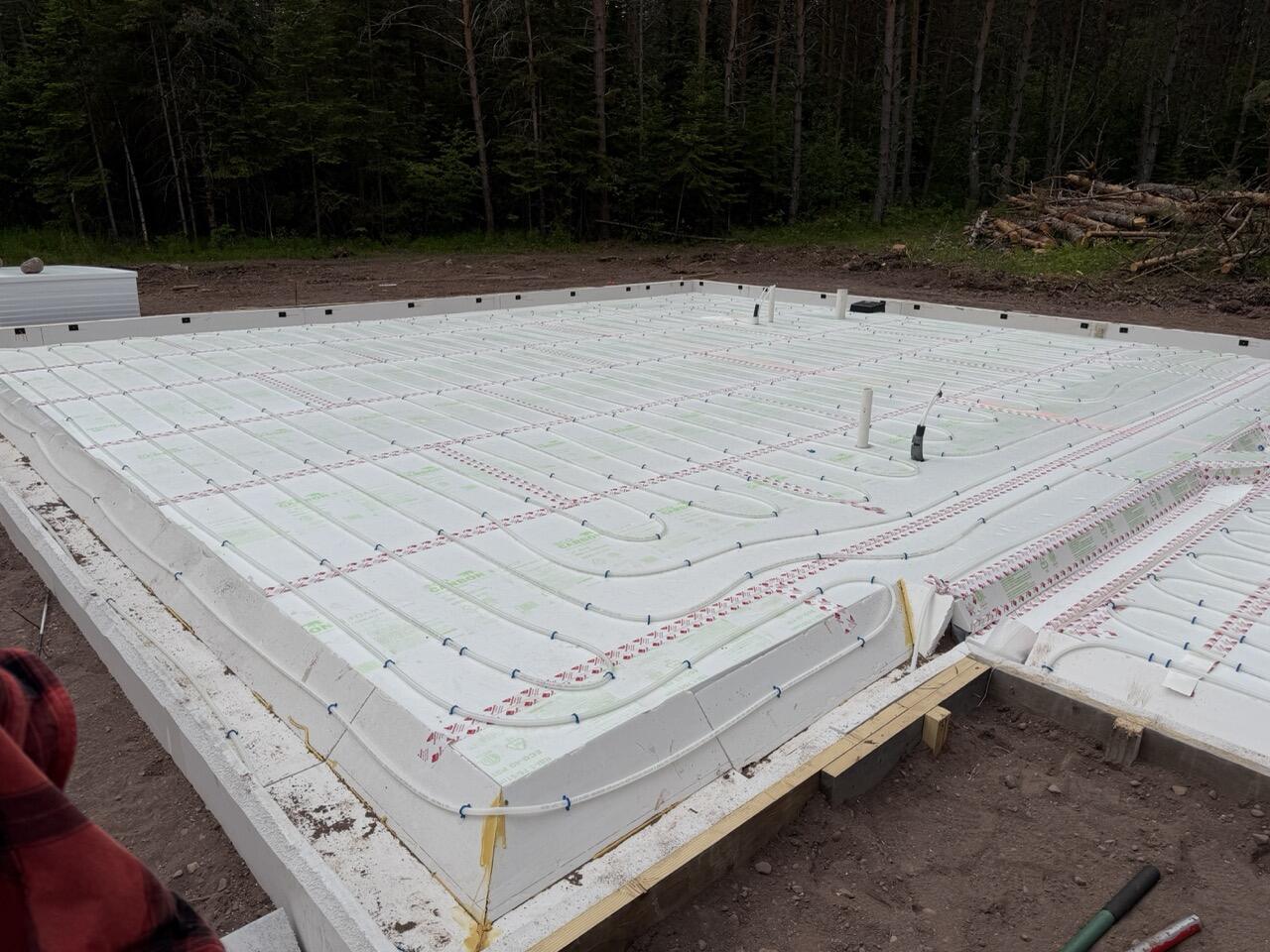
Made, not cut
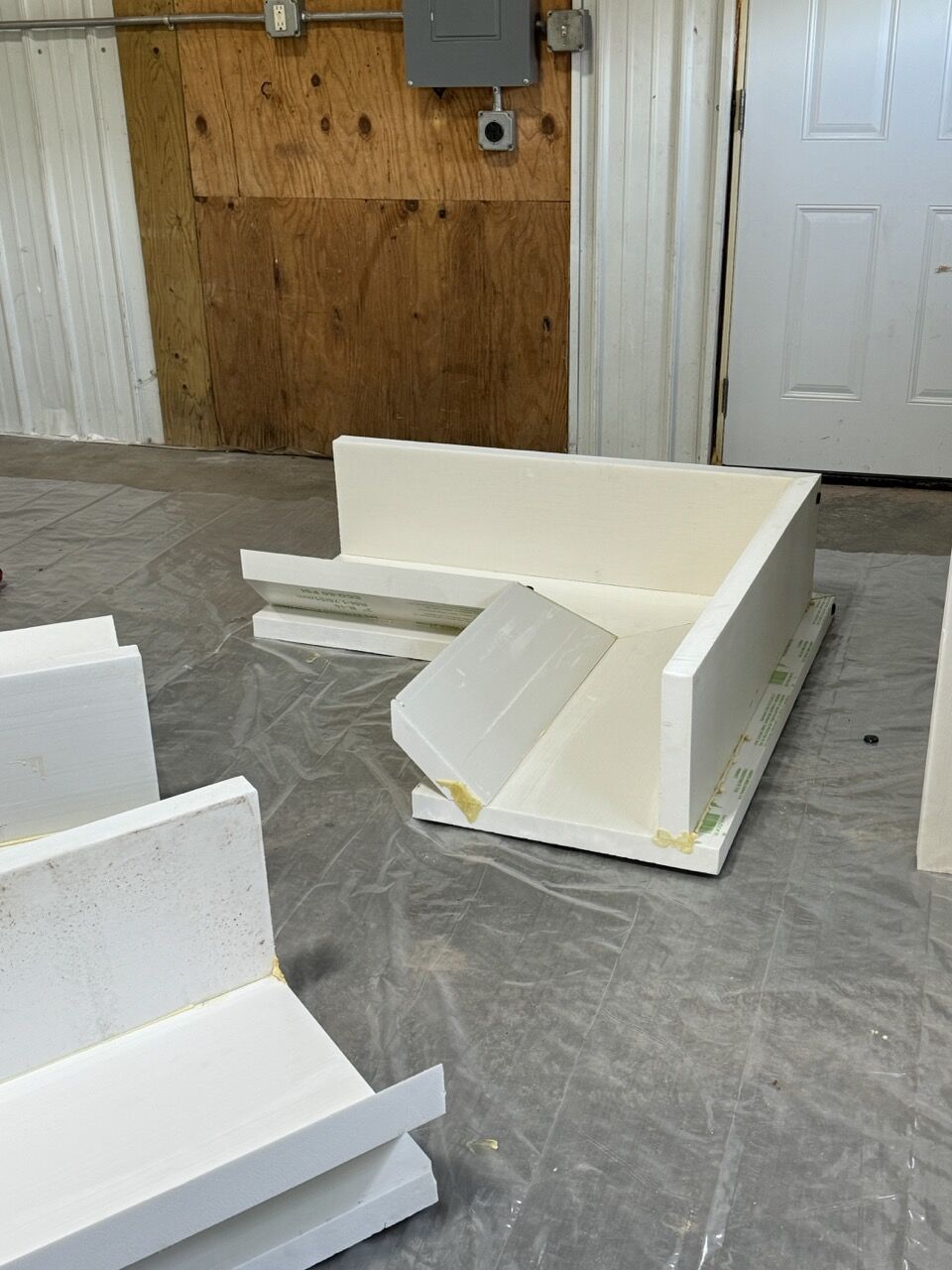
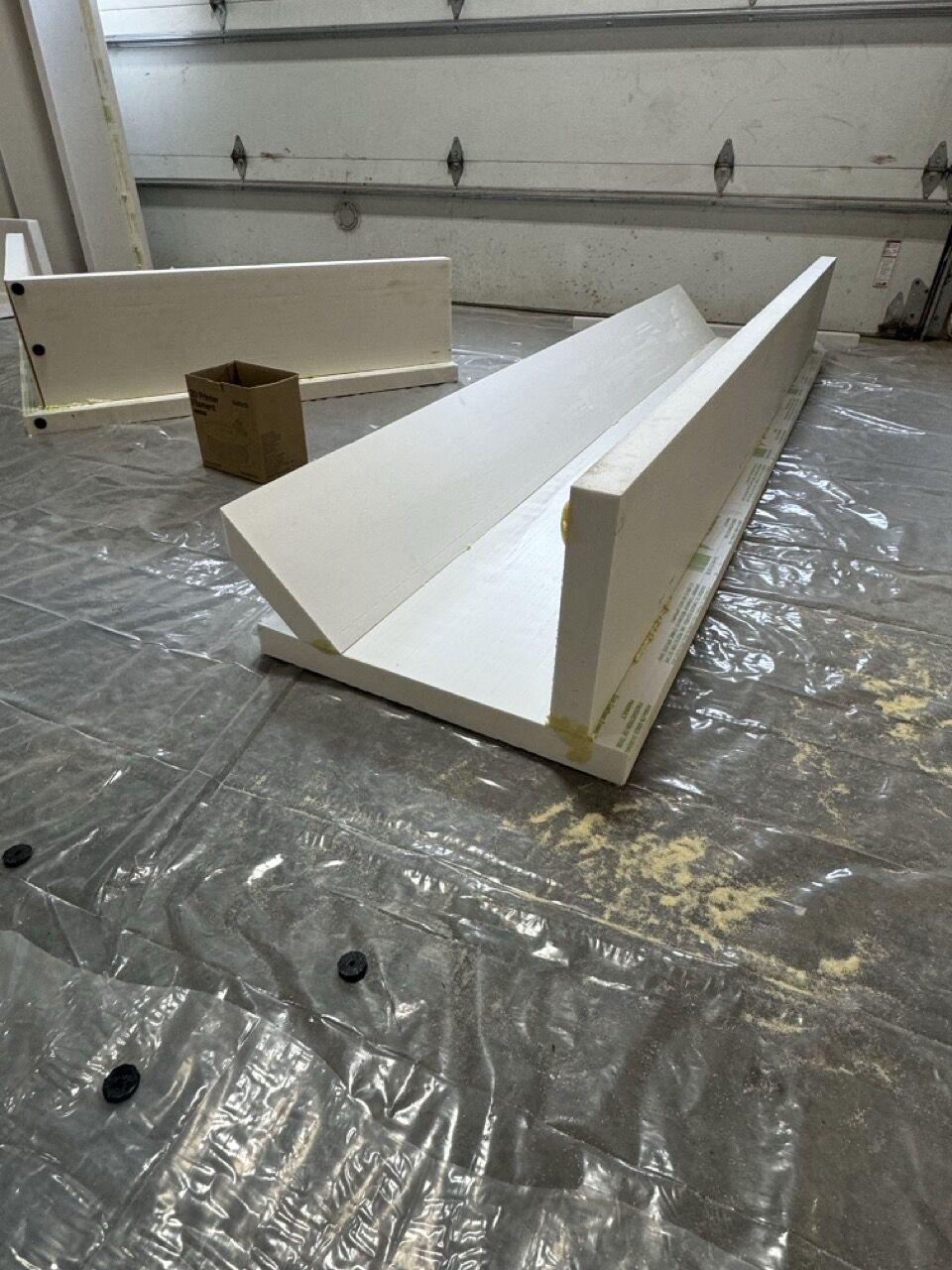
Ninety degree corners come in the delivery
Exterior and interior corners are supplied, and pieces glue together. Nobody is improvising a corner out of straights at seven in the morning.
Adjustable
Set it with a laser, cut the foam level
Screw the lumber to the form, set the height, then cut the foam off at the top of the 2x6. No sinking, no small infill pieces, and room for a last minute adjustment.
10 inch stakes
Stakes through the foam, not hammer drills
Small stakes go through the exterior face to hold the form. Wood wants long structural screws, and in some soils a hammer drill before you can even start.
2 inch overlap
The frost board laps over the fasteners
Exterior frost board runs up onto the form by two inches, which puts the nails behind insulation rather than behind a joint. With wood, frost tracks that joint.
Nothing to store
A few 2x6 travel, the rest goes back
There is no stack of warped, concrete-crusted lumber waiting to ruin the next pour, because the form stayed in the last slab.
Less to set, less to strip, less to store
The saving is structural rather than clever. It comes from the second set of forms you are not setting, the bracing you are not building, and the stripping that does not happen because the form stays in the slab.
- Top hands set the corners
- Anyone can fill in the straights
- No separate interior form
- Nothing to strip after the pour
And nothing to haul back to the yard and store until it rots.
The rest of the system
What else comes on the truck
-

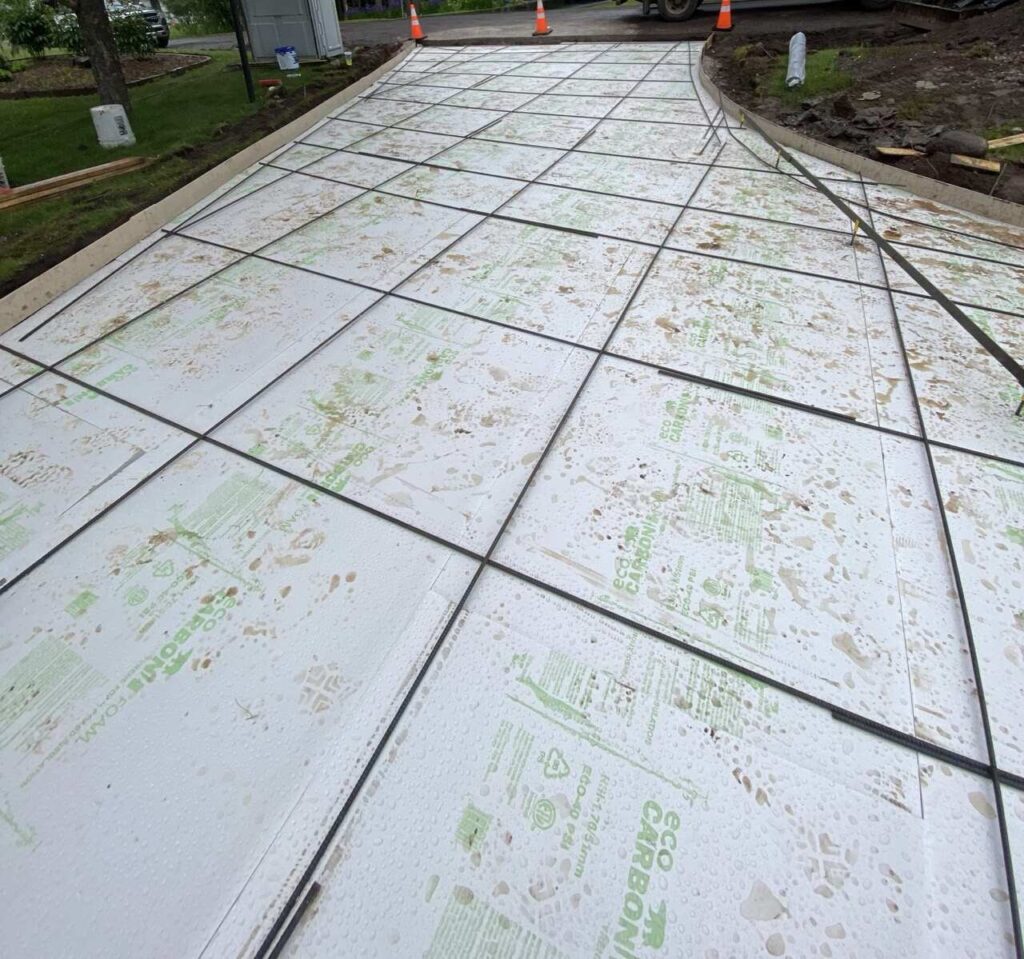
No dirt work after the pour. With wood forms you pour, strip the forms, lay four feet of exterior foam, then backfill. Here the foam goes down before the backfill, so when the pour is done you pull one 2x6 off the top and walk away. No equipment coming back to flatten anything.
Read more -

Send plans, get a takeoff. Forms, foam, rebar, lumber and poly, counted off your engineered drawings and delivered together. Plumbing is the only thing not in it.
Read more -

Interior footing forms. The old way was to dig the footing and maybe drop foam in the bottom. We supply the form so it becomes a complete system, using a higher psi board where the load goes through.
Read more -

85 percent post-consumer recycled polystyrene. The same board as everything else we sell. Recycled usually means discounted. Here it is the reason the board is better.
Read more
Eco Form questions
Does the form stay in the slab?
Yes. That is the point of it. The form is the insulation, so there is nothing to strip, nothing to clean and nothing to store. A few 2x6 travel to the next pour and the rest goes back to the shop.
What do I still need on site?
Lumber for setting heights on the exterior, stakes, and the usual bracing, which is a small amount because the form holds its own shape. Compare that with a full set of forms in and out, staked and backfilled.
Does the base have to be perfectly level?
It helps, and it is not the make or break it is with other systems. Foam can be ordered extra tall and cut down after the forms are set, so there is a second chance at level right before the pour.
Can you screed off it?
Our own crews do, which is what lets them skip the exterior lumber on some pours. Whether it suits your job depends on the screed, the span and the mix, so ask us about the specific pour rather than taking it as a general rule.
What about the footing under a structural support?
The old way was to dig the footing and maybe drop some foam in the bottom. We supply an interior footing form so it becomes a complete system, using a higher psi board where the load goes through.
Do you supply the whole package?
Yes. Send the engineered plans and we will do a takeoff covering the forms, the foam, the rebar, the lumber and the poly, minus the plumbing, and put it on one delivery.
Are custom shapes possible?
Usually. Awkward geometry on a commercial job can normally be made as a foam form, which most contractors do not know is an option. Send the drawing and we will tell you.
What customers say
Trusted by the crews who pour the concrete
Five out of five across every Google review, from contractors across the Upper Midwest.
I have used them and their materials several times. Not only is their material far better than their competitors but the service is as well. I was in a jam and Caleb hand delivered what I needed within the hour. I highly recommend.
Amazing product! It is the only foam we will use beneath our concrete. It performs far better than its direct competitors at a similar price. Service has been excellent, and our materials always show up on time.
EFS is a top-notch supplier. Their high-density eco foam is an excellent new product, strong, clean, and reliable. Great quality materials and service we can count on. Highly recommend.
Eco foam in my opinion is the only foam worth using. The quality and strength of the foam impresses me every time I work with it and use it. I will be using Eco foam for all of my projects. [excerpt]
Best foam on the market. Great service and fast delivery.
Solid product and support.
Who builds with us



Pick your material, pick your delivery date
Order online or text your reorder. We schedule the drop and it lands on site when your crew needs it.