Blog XPS Foam Board
What Drives the Cost of Rigid Foam Insulation in Minneapolis
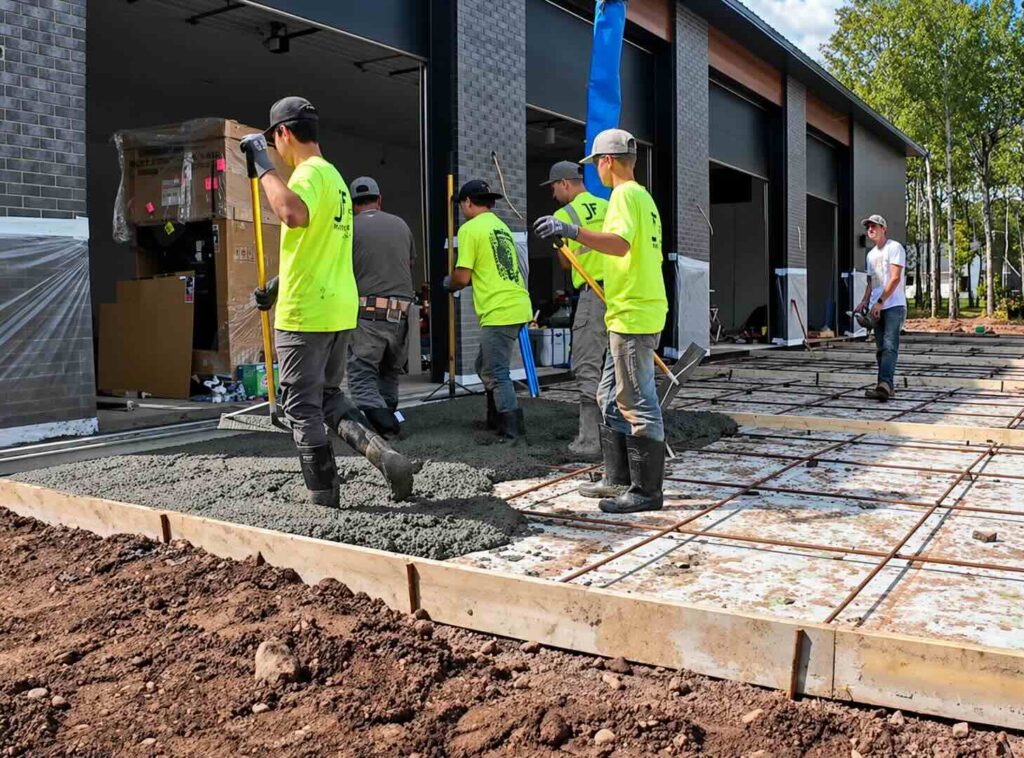
The honest answer to “what does rigid foam cost in Minneapolis” is that the sheet price is the least interesting number in the quote. Two builders can buy the same board at the same price per sheet and land a thousand dollars apart on the same house, because what drives the total is how much board the wall needs and what else has to happen on site.
Here is what moves the number, in the order it moves it.
Your climate zone decides the quantity
Minnesota is not one climate. For energy code purposes the state splits in two, and the Twin Cities and Duluth land on opposite sides of the line.
| Where | Climate zone |
|---|---|
| Minneapolis, St Paul, most of southern Minnesota | Zone 6 |
| Duluth, St Louis County, the northern counties | Zone 7 |
That one line changes your material order. A Minneapolis wall needs less continuous insulation than the identical wall in Duluth, and a Minneapolis slab edge carries its insulation to a shallower depth. Anyone quoting the same thickness for both has not looked at which zone the job is in.
The two table problem
This is where quotes go wrong, and it is worth understanding before you price anything.
There are two separate code tables that tell you how much continuous insulation to put on a wall, and they are answering different questions.
The vapor retarder table tells you how much exterior insulation you need before ordinary painted drywall counts as your interior vapor retarder. In zone 6 that is R-7.5 over a 2×4 wall or R-11.25 over a 2×6. In zone 7 the same table asks for R-10 and R-15.
The energy code table tells you how much insulation the thermal envelope needs to pass the energy code. Different table, different job.
The trap is assuming one covers the other. It does not. The vapor retarder table carries a footnote saying its values are for moisture control so that a Class III retarder can be used, and that they do not replace the thermal envelope requirements. You have to satisfy both, and the higher of the two governs.
Build to the lower number and you have a wall that either fails plan review or passes the energy code while sitting at a condensation risk. We went through what that failure looks like in mold in new construction, and the short version is that thin exterior foam in a cold climate is worse than none.
What moves the price per sheet
Once you know the quantity, four things set what a sheet costs.
Compressive grade. Board is rated in psi, and you pay for the rating. A 40 psi board and a 100 psi board are not the same product. Under a slab a crew will drive on, the higher grade is the cheaper decision, because a crushed sheet is a sheet you bought twice.
Thickness. R-value runs at roughly R-5 per inch, so the thickness follows from the R-value the zone asks for. This is the part the climate zone decides for you.
Edge profile. Square stock or shiplap. Shiplap costs a little more per sheet and gives you a lapped joint, which matters more on a continuous layer than it does under a slab.
Volume. A full order prices differently from a few sheets, which is the normal way materials work.
What moves the total, and it is not the sheet
This is where the real money sits, and where a Minneapolis job and a Duluth job start to look different.
Freight. We are in Duluth, so a Twin Cities delivery is a scheduled run rather than a next morning one. That is a real cost and a real lead time, and we would rather quote you a firm date with the price than have you find out on pour day.
Waste. Board cut to fit a drawing wastes less than board cut to fit whatever showed up. A takeoff against the plans usually pays for itself in offcuts you did not buy.
Labor on site. This is the one most quotes ignore. If an insulated form replaces the lumber, the staking, the stripping, the hauling back and the storage, those hours come off the job. Eco Form is the form and the insulation in one piece, with the ninety degree corners already made, so there is nothing to strip after the pour and nothing warping in the yard until the next job.
How many suppliers you are chasing. Most Twin Cities projects buy foam from one yard and rebar from another, then spend the week before the pour reconciling two delivery schedules that were never written against each other. Rebar cut and bent to your schedule can ride down with the board on one truck for one date, which is one purchase order and one number to call.
Why there is no price list on this page
Because a list price would be a worse answer than no answer.
Commercial packages go out as a bid against the drawings, so the number depends on the schedule, the grade, the quantity and the date. Quoting a per sheet figure out of context would mislead you more often than it helped, and you would have to re-price everything the moment the drawings changed.
What we will do is a takeoff. Send the engineered plans and we will come back with the forms, the foam, the rebar, the lumber and the poly on one quote with a delivery date attached.
Getting a real number
Three things get you an accurate quote rather than a guess:
- The zone the job is in. Minneapolis is zone 6, which changes the thickness from a Duluth job
- The assembly. Wall, slab edge, under slab, or all three. Our under slab insulation and continuous exterior insulation pages cover what each one is doing
- The date. Delivery to the Twin Cities is scheduled, so the pour date shapes the answer
Send us the plans and we will price it properly. If the honest answer is that a local yard is closer and the freight does not make sense, we will tell you that too.